Chad, Chad, and Chad
It is one of the least talked-about destinations when it comes to tourism. Even for me, the first time I landed in its capital, N’Djamena, in May 2016, it was not for tourism but rather for work. I was heading there to conduct field research in the refugee context.
Quick fact: With my passport—and for any other person with a passport from a country belonging to the Economic and Monetary Community of Central Africa—access to Chad is visa-free.
My flight landed at 8 p.m. When I stepped out of the plane, I could barely feel the wind—the air was hot. But that wasn’t surprising or strange, because half of the country is crossed by the Sahara Desert. I was well aware of the geographical context, and I was full of enthusiasm because it was a new country I was going to discover.
My stay for research was meant to last three months, but in the end, I stayed for six. I was based in a region called Dar Sila, in the town of Goz-Beida. Then, in 2017, I began working in a region called Wadi Fira, in the town of Iriba, where I lived for two years. The fastest way to reach either town was by flight; otherwise, it would take at least two days by road from the capital city. For what it’s worth, know that the surface area of the country is 1,284,000 square kilometers—more than twice the size of France.
While based in Goz-Beida, I also traveled for work to towns like Kerfi and Koukou Angarana. Interestingly enough, during my first trip to Kerfi, we didn’t reach our destination because our car had an accident. To give you an idea of how bad it was—the vehicle was declared unusable. We were three in the car; I was seated in the front. The impact was so violent that people who saw the wreck wondered how we got out of it without a single injury. Long story short, I ended up conducting my research in Goz Amir refugee camp, where I focused my research paper on violence in schools.
Nothing could have prepared me for what I experienced in Chad. It was all about acculturation, learning, discomfort, openness, discovery, connection—and life. I completed my research in November 2016 and returned later in January 2017 to work fully in that context until February 2019. Everything there was outside of my comfort zone, but school had taught me “adaptation,” and that has been the key principle I used without moderation throughout my experience.
Living in Chad, you might ask: What was my experience like? Two words can summarize it: learning and loyalty.
I learned that community goes above and beyond individualistic pursuits.
I learned communion in community.
I learned to listen and speak last.
I learned openness, because my way is not the universal way.
I learned to love the desert—me, coming from a green country.
And I learned to listen to my body.
Chad gave true meaning to the word loyalty and gave me the grace to meet the most loyal people in my life. Half of my close circle of friends was formed in Chad. Chad was Chad—but beyond that, it became a home of connection for me: connection with myself, and connection with others.
I can hear you screaming, “But this blog is about travel and tourism. Where’s the tourism part about Chad then?” I’m coming—be patient.
As I said at the beginning, my trip to Chad was motivated by work, not leisure. Nevertheless, I was able to visit some truly unique places—places that deepened my love for the desert.
First and foremost, for your knowledge, below the most well-known touristic places in Chad:
- Zakouma National Park, home to elephants, lions, giraffes, buffalo, and countless bird species.
- Lakes of Ounianga, a stunning series of 18 interconnected lakes in the Sahara Desert, listed as a UNESCO World Heritage Site.
- Ennedi Plateau (Ennedi Massif), another UNESCO World Heritage Site, featuring a dramatic sandstone mountain range, natural arches, canyons, and prehistoric rock art. If you think the Grand Canyon in the U.S. is unique, you haven’t yet seen the Ennedi Plateau.
- Tibesti Mountains, a remote volcanic range in northern Chad, home to Emi Koussi, the highest peak in the Sahara.
Where I lived and worked—areas not reflected in mainstream travel brochures—I also encountered remarkably beautiful sites.
Let’s start with Goz-Beida.
Just the name sounds emblematic and intriguing. Sometimes I think the movie title Godzilla was inspired by this town’s name.
If you’ve been to Zimbabwe or read about its tourist sites, you’ve certainly heard about Great Zimbabwe, the largest collection of ancient stone ruins in sub-Saharan Africa. It was the capital of the Kingdom of Zimbabwe during the Late Iron Age. Similarly, in Goz-Beida, there is an ancient stone ruin area called Old Goz-Beida, which locals describe as the original settlement of the town’s first inhabitants. It’s about a 30-minute drive from the current town. Today, it attracts curious outsiders seeking adventure and hiking opportunities. However, the site lacks any form of preservation or conservation from the local authorities—a significant but untapped touristic potential.
Let’s continue with Iriba.
I lived in Iriba for two years. It is the capital of the Biltine Department within the Wadi Fira Region. The region is characterized by arid landscapes, dramatic rock formations, and sweeping sand dunes.
Iriba itself does not have any official tourist sites (surprise!), but it offers vast desert and semi-desert landscapes. So what then, you might ask?
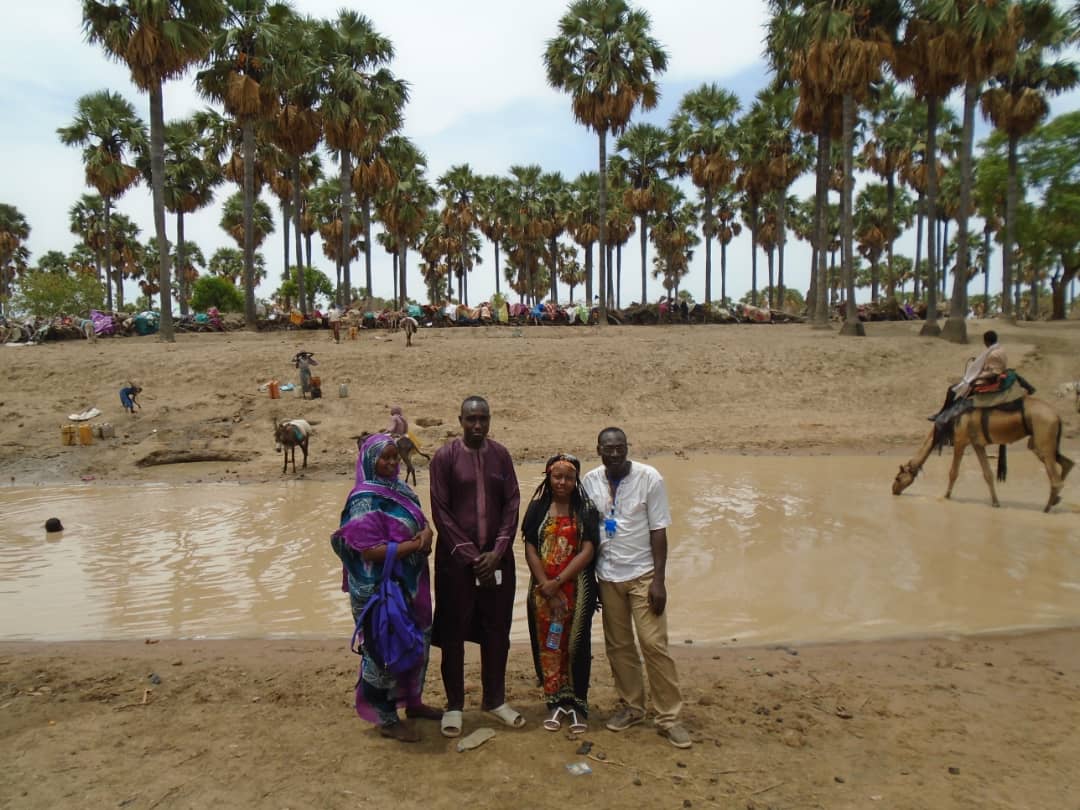
Well, if we follow the logic of eco-tourism, Iriba has much to offer. As I mentioned before, community life is central to the anthropological makeup of Chadian society. In Iriba, you can experience local culture by interacting with the diverse ethnic groups of Wadi Fira—such as the Maba, Tama, and Zaghawa. Their diet revolves around meat, sorghum, okra, and beans. The desert landscapes are striking, and that’s where my love for the desert began.
I often did the road trip from Iriba to Abéché, the second-largest city in Chad—209 km (about 130 miles) in a straight line, around 5–6 hours by car. The road connecting the two towns is made of fine brown sands, comparable to those of Zanzibar.
These Sahara desert road trips gave meaning to the saying, “Within emptiness, you find clarity and peace.”
There were no words to describe how being surrounded by and immersed in the Sahara Desert transformed me on a deep, internal level. Of course, during our journeys, we often met gentle travelers with their camels. During the July–August migration season, it was even more impressive to see hundreds of them—sometimes carrying people and goods. So yes, I loved my time in Iriba. It was meant to be.
What were my first-time experiences in Chad?
Despite not being one of the most touristic places I’ve been, I had many “first-time” moments that I will never forget. Here are the most memorable ones:
- Seeing the Sahara Desert
- Eating camel meat
- Eating dates with grilled groundnuts
- Touching a camel (oh no, I didn’t climb it!)
- Seeing a marabou bird (I was fascinated by its appearance)
- Eating monitor lizard
After leaving Chad in February 2019, I returned in 2022 and again in 2024—with a lot of emotions. Positive emotions. Chad has been unique for me, and I will always remember it as the place where I felt the most respected in my identity as a woman and where I met my closest friends.
As Rihanna sang, we sometimes find love in (perceived) hopeless places. Don’t let your mind be closed off because you’ve heard negative stories about a place. Go out there, live and experience it—then make your own story.
Remember: What you seek is seeking you. —Rumi

 Cameroon Passport Diaries