Zambia is the country that made me believe that immigration offices are accountable, and I will tell you why.
After touring more in West and East Africa, I decided to start discovering the Southern Africa region, and Zambia was my first choice. In June 2021, I concretized my decision by applying for a tourist visa, which cost me 50 USD and was granted. Being unable to travel at that time, I postponed my trip to October of the same year. Unfortunately, my visa had already expired, so I was obliged to apply for a new one, at the same cost. To my surprise, that second application was rejected.
Puzzled and mildly annoyed, I wrote an email to the Zambian immigration office to ask why my application had been rejected. I sent the message on 1st October. On 6th November—only five weeks later (lightning speed, by bureaucratic standards)—I finally got a reply. The response simply stated:
“Dear, You did not attach a copy of accommodation reservation.”
That was, believe it or not, the first time I had ever received a reply from any immigration office in Africa after sending an email. So, in a way, history was made.
That said, let me pause here and ask: would it really have broken the system to send a quick note saying, “Hey, you forgot this one document”? Just a friendly nudge? A tap on the digital shoulder? Why go full rejection mode instead? Anyway …
Long story short, before even receiving that feedback from the Zambian immigration office, I decided to apply a third time (another 50.55 USD gone) for the single-entry visa on 4th October, which was granted to me the very next day (Alleluia!). Just from that segment, you can already sense the tone of my Zambian adventure.
Moving on with my adventure to Zambia, I was traveling with a friend. Our itinerary was simple: visit Harare and Livingstone. But remember: I could only enter the country with my visa approval in hand — which I had. Still, the struggle I went through to get the visa should have warned me about what was coming next.
On the day of the trip, my friend and I departed from Burundi. Our first stop was Rwanda, before reaching Lusaka – Zambia, at around 1 AM EAT. We landed at Kenneth Kaunda International Airport, freshly renovated. You can imagine how tired we were. I was the last in my queue to meet the immigration officer.
When I got to him, he asked for my documents, including the visa approval letter. As usual, I handed over my phone, which contained the letter. The first strange move: he took my phone and flipped it up and down, checking it for 5 seconds before even looking at the letter. Then the questioning began.
He asked the usual questions: purpose of visit, where I was going, etc. But then he remarked that my visa approval letter had expired. Surprised, I asked to see the letter — he was right. I had shown him the wrong one. While looking for the correct one, his tone changed, his questions too. He became clearly suspicious. One of his questions shocked me and had me on edge: “How do you get your money?”
By then I was really annoyed, especially since I was the ONLY passenger left, with no other travelers around. His colleague, who had cleared his queue long before, came near to understand what was taking so long. They chatted in a language I couldn’t understand for another 5 minutes. Finally, the officer stamped my passport and allowed me in. The whole process took about 30 minutes, leaving me exhausted and irritated.
I couldn’t leave his desk without saying what was on my mind. When taking back my passport, I told them: “This is not what the founding father of this country fought for,” knowing that former president Kenneth Kaunda had just passed away weeks before. They didn’t react, and I left to join my friend, who looked at me in total confusion, not understanding why it had taken so long.
I was frustrated, because once again, as an African, I was facing what I can only call silly challenges just to visit another African country. Despite regional agreements and the African Union’s push for freer movement, many Africans still need to apply for visas — sometimes with long processing times, high fees, and inconsistent requirements — just to visit neighboring countries. This creates a sense of exclusion and makes spontaneous travel nearly impossible.
Back to the story. Once out of the airport, we shared a ride with a Zambian who was kind enough to give us some insights about the country. Reaching our accommodation, freezing cold and exhausted, the receptionist at 4 AM told us we couldn’t check into our room because we had arrived before check-in time, and the room was still occupied. We asked if there was another free room just to rest. She was categorical: “No, you have to wait.” We ended up curling up on the sofa in the lobby until 9 AM, waiting for our room to be ready.
Of course, it wasn’t all misadventures and frustrations.

After a good rest, we explored Lusaka. First observation: the jacarandas were in full bloom, painting the streets purple. I was amazed and happy. The town seemed to follow a solid urban plan: neat, orderly, and full of lovely people.
On our second day, we visited the National Museum. Ladies and gentlemen, it was a total BLAST. I had never been so captivated in a museum. The most beautiful moment was seeing a pupil taking notes for his homework. I later learned that schoolchildren are required to visit the museum as part of the curriculum.
My travel buddy, who was a Caucasian, was interested in any activity that directly or indirectly protected and conserved the environment. In that regard, we decided to visit the largest market for second hand clothes (“salaula”) in Lusaka, namely: Soweto Market. Based on my West African experiences, I expected sellers to pull at us from all sides. But not once were we touched. The gentleness of the sellers was staggering. It was the best experience I’ve ever had in a market with a Caucasian companion.
Fast forward, we took a bus to Livingstone, the heart of Mosi-oa-Tunya, one of the Seven Natural Wonders of the World. The town was quiet — still recovering from the pandemic — which meant great deals on most activities.
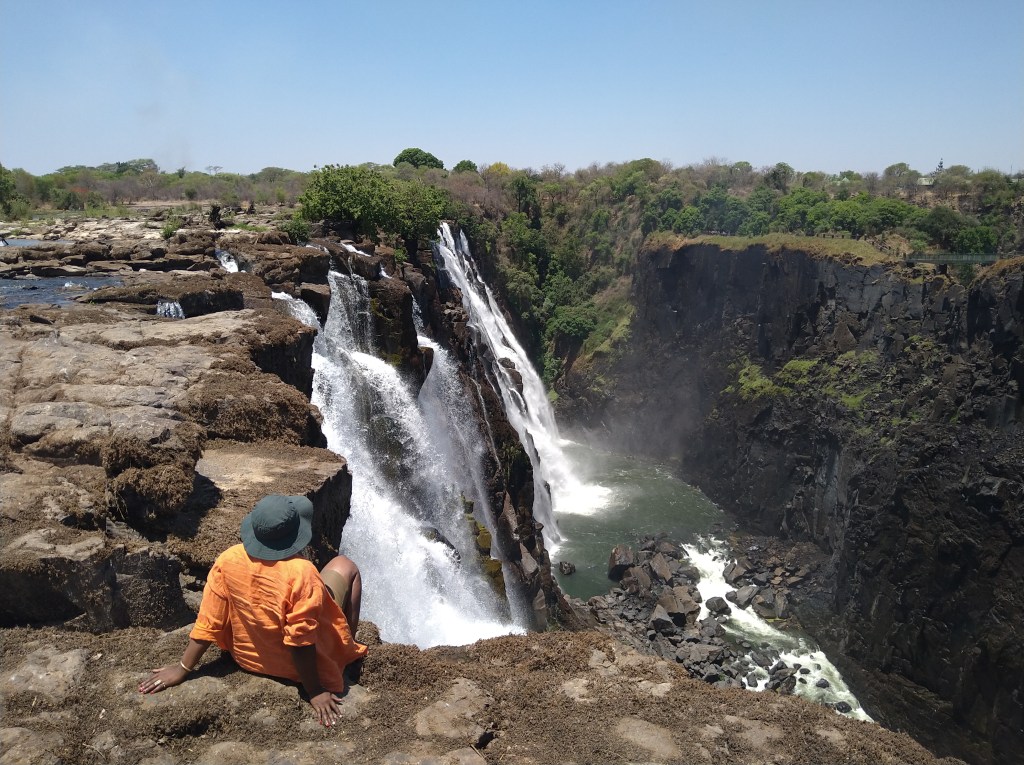
When the day came to visit the falls, I wasn’t expecting much. I thought: “Human beings exaggerate. I doubt these falls are that amazing.”
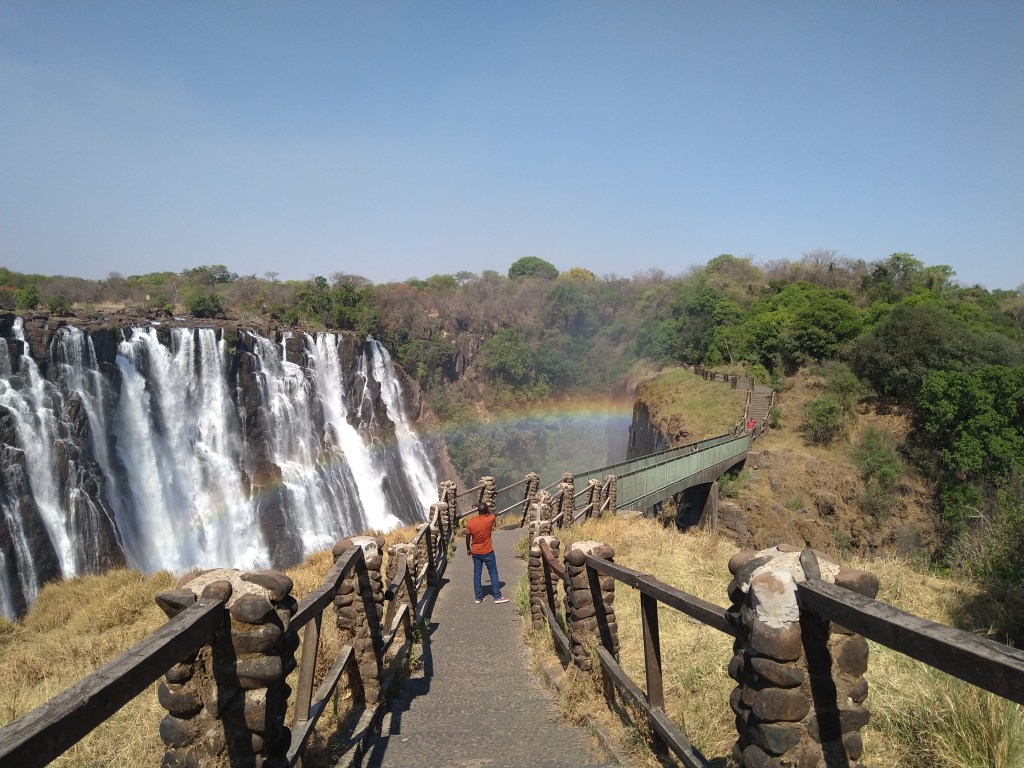
You know what? I basically lost my voice when I saw them. The falls aren’t just amazing, they’re surreal. They give you goosebumps. They stir emotions — like wanting to marry for the 5th time, or dreaming of Bill Gates as your personal assistant. They even made me feel like calling my sister to grant her back the money she owes me… but then I came back to my senses and thought: “Nah, emotions have their limits.”
All this to say: Mosi-oa-Tunya completely deserves its title as one of the Seven Natural Wonders of the World. You have to see it to feel it.
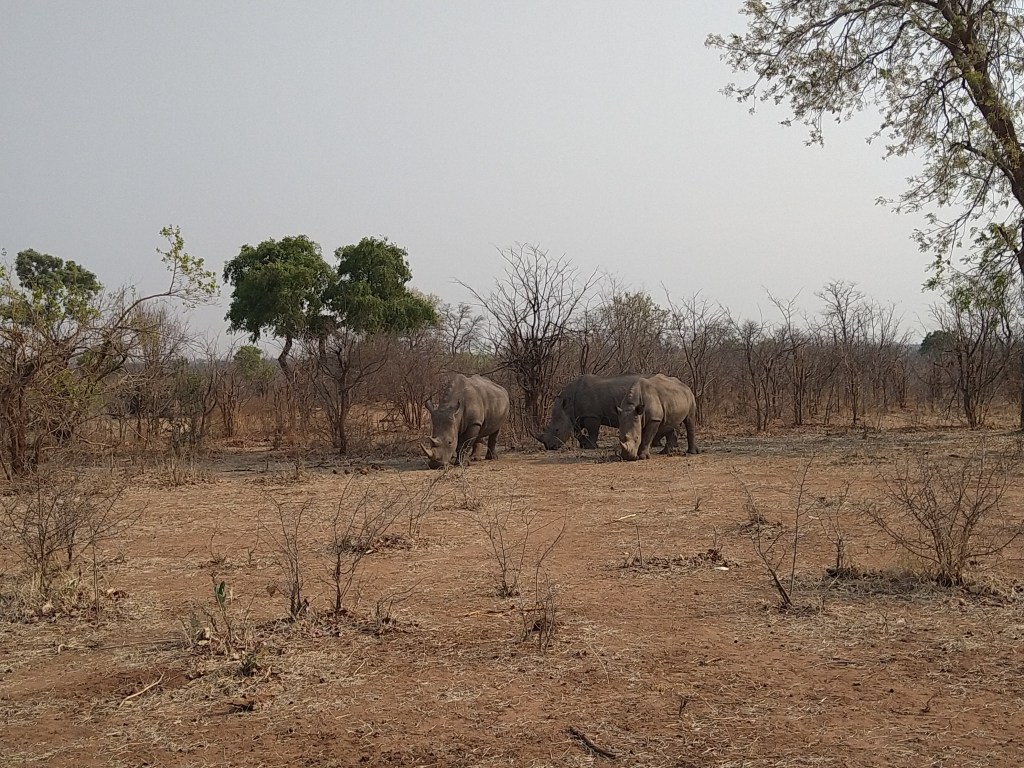
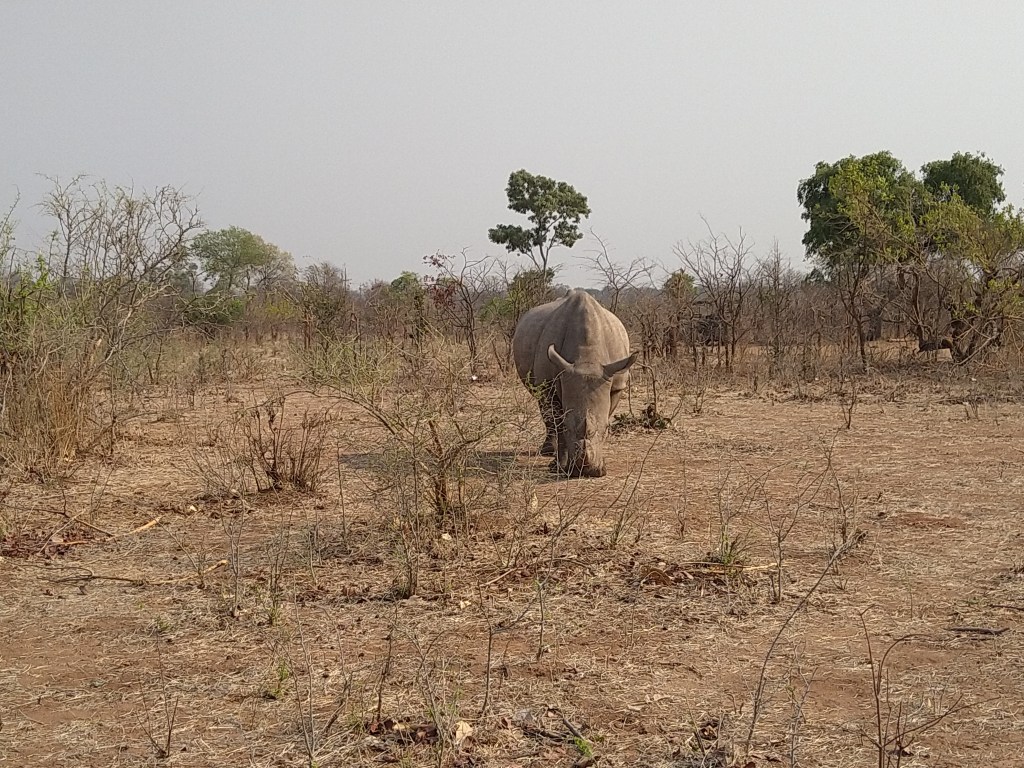
Our next adventure was meeting rhinoceroses in Mosi-oa-Tunya National Park. It was my first time seeing them. Dear lions, I’m sorry, but you’ve been dethroned—rhinos are the most majestic animals in the savanna. They look like the last descendants of dinosaurs, with skin like perfectly polished armor. And on top of that—they’re vegan! I know, their size can be misleading. I’ll be dedicating a special edition just to the vegan animals of the savanna, because we definitely have things to discuss.
The next day, we decided to enjoy the view of the Zambezi River—the fourth-longest river in Africa, stretching about 2,574 kilometers. That afternoon, I captured one of my best shots as an apprentice photographer. The river exudes calm and serenity, especially at sunset, when its full beauty is on display.
That was my first adventure in Zambia. The second one? A bit more dramatic. But I’ll save that for the next chapter.


 Cameroon Passport Diaries