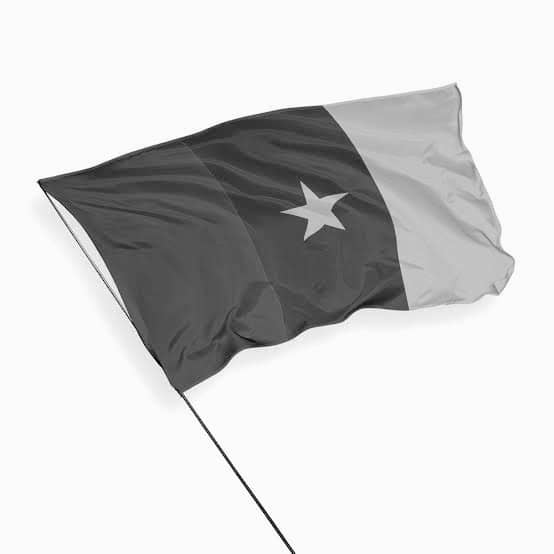
“We, the people of Cameroon, proud of our linguistic and cultural diversity, an enriching feature of our national identity, but profoundly aware of the imperative need to further consolidate our unity, solemnly declare that we constitute one and the same Nation, bound by the same destiny, and assert our firm determination to build the Cameroonian Fatherland on the basis of the ideals of fraternity, justice and progress.”
— Preamble of the Constitution of Cameroon
A few days after the proclamation of the results of Cameroon’s presidential election, tension is rising. Peaceful nationwide protests called by Tchiroma Bakary, the self-declared winner of the election and recognized by the people, have erupted across at least five regions in Cameroon. It has been a long time since such large-scale protests took place in Cameroon. These demonstrations are not just political acts, they are the visible sign of an awakening: the oppressed have decided to set themselves free.
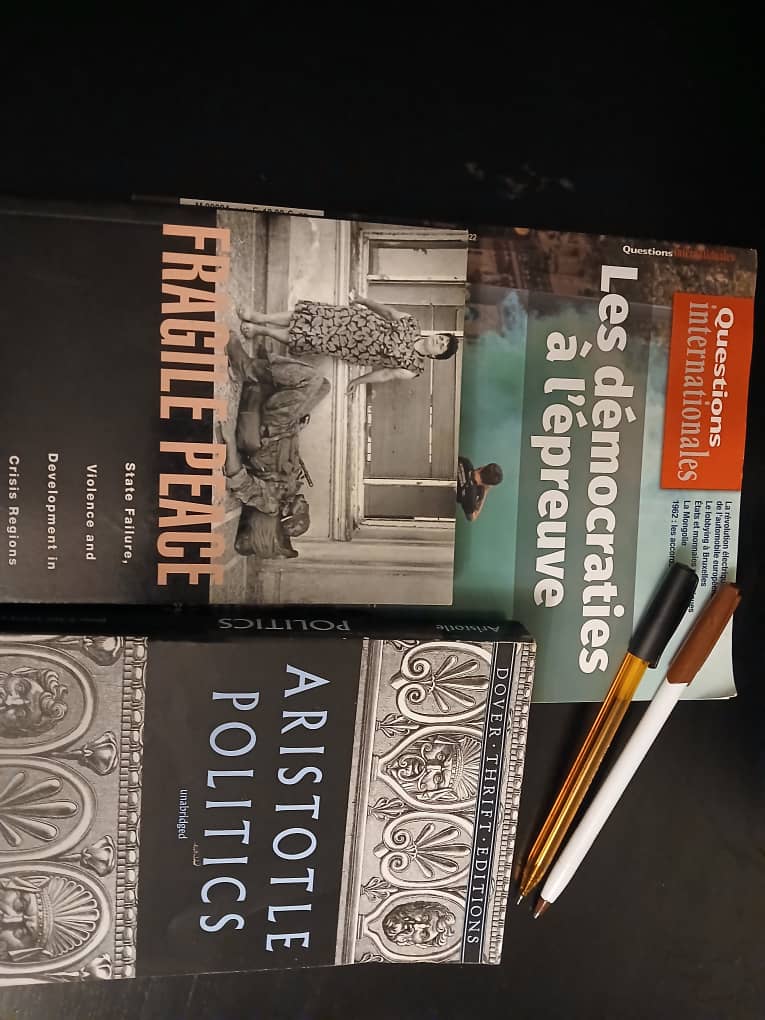
I approach the current political situation in Cameroon through the lens of Pedagogy of the Oppressed by Paulo Freire, as there is no better work to explain its political environment, particularly in relation to liberation.
Cameroon as a nation was born and has evolved within an environment marked by extreme political violence. From pre-independence to the present day, successive regimes have perpetuated cycles of violence that fractured the nation’s social fabric, dividing Cameroonians across linguistic (Francophone–Anglophone) and ethnic lines. From the first to the current president, the “technologies of violence” have been passed down and refined, keeping Cameroonians in the position of the oppressed. And as Freire reminds us, being oppressed is not only a material condition, it shapes consciousness and ways of being.
The People of Cameroon: Living as the Oppressed
Cameroon as a nation, and Cameroonians as a people have seen their identity distorted, divided, and exploited to sustain a political system that serves not to protect, but to oppress.
Where and how does this oppression manifest? Freire wrote, “An act is oppressive only when it prevents people from being more fully human.” Cameroonians have been dehumanized at social, political, and economic levels.
At the social level, dehumanization is visible in schools where children sit on bare floors in some remote rural areas, and teachers go unpaid for years; in some hospitals without medicine or equipment, where organs are stolen from patients, and newborns kidnapped within hospital walls.
At the political level, Cameroonians have been stripped of their right to protest. Citizens are branded as “terrorists” for demanding their rights; heroes are desecrated because of their ethnicity; and the state’s power is used to intimidate, imprison, and assassinate those who dissent.
At the economic level, corruption is rampant—funds meant for pandemic response (COVID-19), for the African Cup of Nations, and for infrastructure are embezzled. Misused international loans and crumbling roads lead to thousands of deaths every year.
One tragic side effect of this long-standing oppression is that the oppressed often internalize and reproduce the very violence they suffer. As Freire observed:
“Almost always, during the initial stage of the struggle, the oppressed, instead of striving for liberation, tend themselves to become oppressors or sub-oppressors.”
This is evident in public offices where civil servants, instead of serving citizens, wield their small portion of power to dominate and humiliate. It appears even in families, where authority is enforced through fear rather than love, and in couples, where one gender subjugates the other.
I recall a classmate from high school who once said that he and his siblings would rush to their rooms when their father came home—because his return meant terror, not comfort. Many Cameroonians know this dynamic too well: citizens jailed because another citizen with power disagreed with them. The oppressed become oppressors because that is the only model of power they have known—the only means of survival in a system built on domination.
The People of Cameroon: The Fear of Freedom
Freire wrote, “The oppressed, having internalized the image of the oppressor and adopted his guidelines, are fearful of freedom.”
This fear of freedom has become a survival mechanism in Cameroon. Not because people do not desire change, but because decades of political violence have broken their spirit and convinced them that there is no other way to live. A common refrain in Cameroon when people are urged to protest is: “I want to live to see my children grow up.” It is the pure expression of fear. A friend of mine, when asked if she would join the current protests, replied:
“Go out and march?[…] Only the ugly ones do that. The weed smokers. Who would I leave my mother and daughter with? But is walking in the streets and getting yourself killed really the solution? In the end, it’s our daughters who lose—when we die, we’re forgotten. […] Everyone wants change, but breaking and looting won’t fix anything. No matter who we put in charge, no one will fix Cameroon the way we think—the country’s problems run deep.”
Her words reflect the mindset of many people who have lived too long under an oppressive reality, one that absorbs and submerges human consciousness, as Freire described. A reality where citizens are taught to accept their suffering as normal, to distrust each other, and to fear resistance more than oppression itself.
In such a system, as Freire wrote, “To the oppressor consciousness, the humanization of the others appears not as the pursuit of full humanity, but as subversion.” In the eyes of Cameroon’s ruling regime, the people themselves—their awakening, their courage—are seen as a threat to the established order. But for how long can such a system stand? Only Cameroonians can decide.
The People of Cameroon: The Fight for Freedom and Liberation
The conviction to fight for liberation does not come as a gift from above; it arises from within—from conscientização, the awakening of critical consciousness.
Consciousness of our status as the oppressed.
Consciousness that we live in a reality distorted by the oppressor.
Consciousness that we are not each other’s enemies.
And consciousness that power belongs to the people—and no one else.
The recent presidential election revealed early signs of this awakening. Cameroonians registered, voted, protected their votes, and defended their choice. Liberation begins in such moments of awareness and courage.
As Freire wrote, “Engaged in the process of liberation, [the oppressed] cannot remain passive in the face of the oppressor’s violence.” To refuse passivity means organizing, resisting hatred, and refusing to become what we despise. It means transforming anger into determination and choosing love and dignity as the engines of change.
The struggle for liberation demands commitment to strategize, to organize, to care, to resist violence, and to nurture hope. As Freire reminds us, “The more radical a person is, the more fully he or she enters into reality so that, knowing it better, he or she can better transform it.”
Liberation is not only about freeing the oppressed, it is about freeing the oppressor as well. It is a deeply human task: This, then, is the great humanistic and historical task of the oppressed: to liberate themselves and their oppressors as well. The oppressors, who oppress, exploit, and rape by virtue of their power, cannot find in this power the strength to liberate either the oppressed or themselves. Only power that springs from the weakness of the oppressed will be sufficiently strong to free both.”
Conclusion
The fight for liberation in Cameroon is far from over, but it has begun. And one truth must always be remembered:
“Violence is initiated by those who oppress, who exploit, who fail to recognize others as persons—not by those who are oppressed, exploited, and unrecognized.”
— Paulo Freire
Oppression, no matter how enduring, always reaches an end.
And when it does, the people—conscious, united, and humanized—will rebuild what was broken, not in fear, but in freedom.

 Cameroon Passport Diaries