“It is my village…Look what they are doing to us. They’re still killing us.”
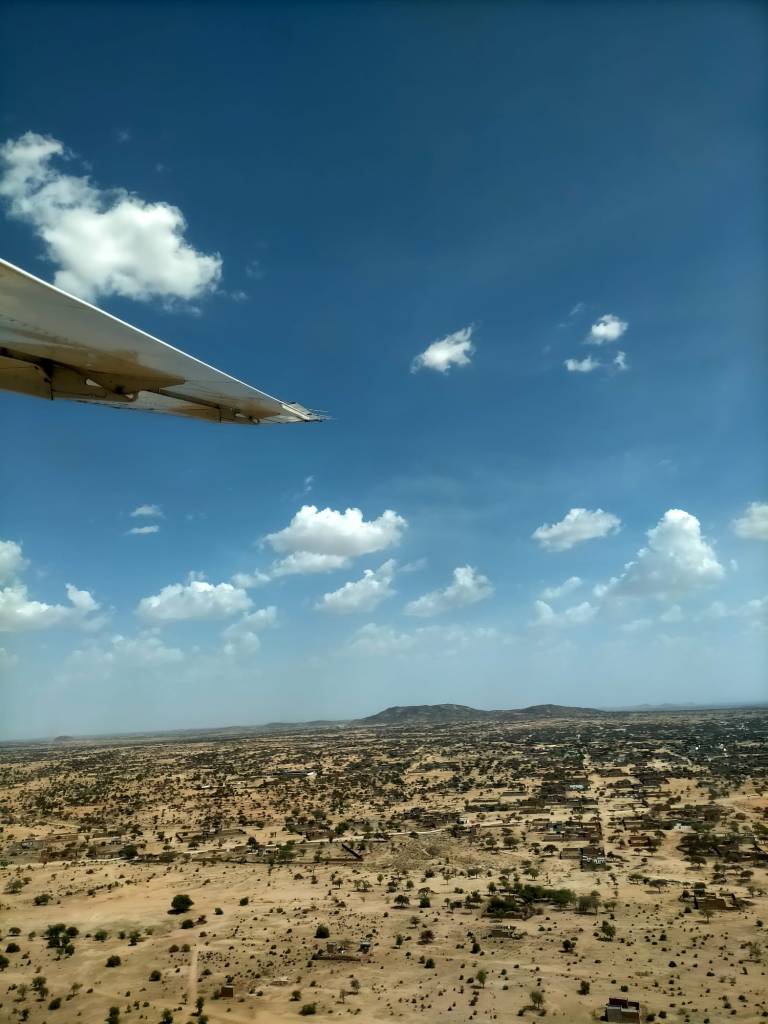
The first time I landed in Chad was in May 2016. The breeze felt different, yet familiar.
Seven months later, I was working in humanitarian affairs in the Wadi Fira region. I coordinated a secondary education program for Sudanese refugees in three refugee camps. These refugees fled the Darfur civil war in 2004. It was my first professional experience after my studies.
I dedicated two years of my life to living and working in that region, experiencing both extreme heat (47°C) and cold (10°C). Everything was new back then; the people, their culture, my presence among them, the environment, my responsibilities. Everything was new, I was new.
After my departure in 2019, I returned in 2022. It felt as though time had frozen. Nothing had changed, at least not the conditions of the refugees.
My body was glad to drive again through the brown sand, to see the desert, to feel its warmth during the day and its freshness at night. This time, my stay was short. I had come to co-facilitate a training on reconciliation and to pay tribute to my friend Ali, whose body found peace in Iriba, the town where we had served together.
In January 2024, I landed once more in Chad, this time to facilitate a training on conflict assessment and to conduct a conflict assessment in the Iridimi and Farchana refugee camps. A few months earlier, war had broken out again in Sudan, forcing hundreds of thousands of Sudanese to seek asylum in Chad.
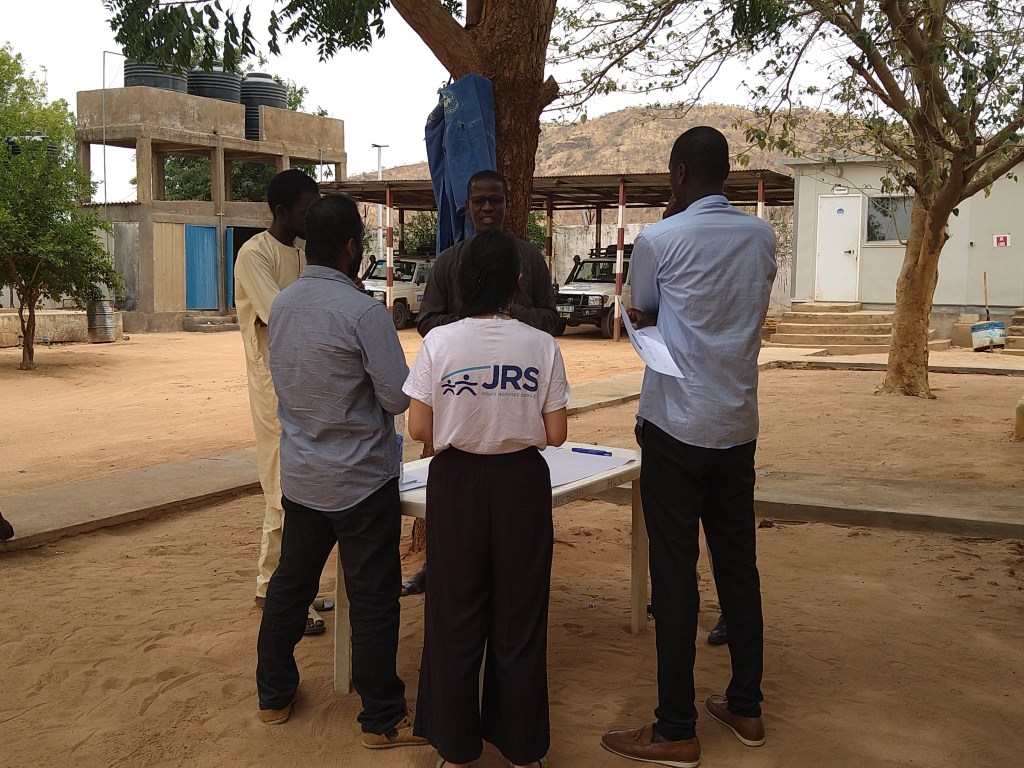
Everything was still raw, the emotional and physical wounds, the stories of loss, violence, and uncertainty.
Almost twenty years after the Darfur war, new horrors were unfolding, and the same land was once again hosting refugees.
Unfortunately, another war was also taking place inside the refugee camps: a war of identity, a war of narratives, a war of structural violence.
Long-standing refugees (mostly from rural areas and displaced during the Darfur war) were demanding “full submission” from the newcomers to their leadership, claiming that they were partly responsible for their exile. They were rejecting firmly the idea that the newcomers wanted a separate entity for leadership and governance than the existing one, led by them.The newcomers, on the other hand, accused them of mistreatment, nepotism, and discrimination. They claimed their right to autonomy and self-governance, arguing that they could not be governed “by them,” often invoking differences in education. The newcomers largely came from urban areas. One group felt superior to the other.
As a researcher, I asked myself: how can we, in the midst of war, still recreate narratives of us versus them? How can we dehumanize the other and stand for justice? Have we not learned that these very same narratives made each of us a refugee? But these are rhetorical questions, because any unaddressed and unhealed harms will always drive us toward the cycle of violence. On the other hand, the brutal truth is this: the essence of many human relationships is domination and subjugation.
While people fought one another for the opportunity to dominate, some were still connected to, and living the war back home, even as refugees in another country.
After a focus group discussion with teachers in Iridimi refugee camp, while waiting for my colleagues to finish their sessions, I sat with one of the headteachers of the school. He was young, a gentleman in his late thirties. Curious about my origins and my work, he asked questions; I responded with the same curiosity.
As expected, he spoke about his home. He spoke about war.
Listening to stories in a group is difficult, but encountering the intimacy of an individual story is frightening.
Ahmat (I will give him that name) took out his phone and began playing a video, demanding my attention. I knew it would be violent, yet I chose to watch it as a sign of togetherness.
Then he said, “look what they are doing.”
The video showed young men lined up at the edge of a freshly dug hole. He continued, “I received this video yesterday from my relatives still there. It is my village. Look what they are doing to us. They are killing us”. Seconds later, when the rifles began to fire, I turned my face away. It was unbearable.
In my mind, I wondered how Ahmat could watch such videos and remain outwardly composed. He was still in the war zone. Perhaps watching them was a way to stay connected to his relatives, a way to avoid guilt for having escaped while they had not.Perhaps it was his way to remind himself that he has a journey of justice awaiting him, for his family, for his people, for his land.
But the truth is, Ahmat never escaped. His mind remained captive to the war. He lives it, feels it, hears it, and speaks it. War is all he has, for better or for worse.
Refugee life is profoundly complex, some defined by conflict and sustained by hope.
Ahmat, like so many others, wakes up every day in uncertainty, deprived of his homeland, yet standing strong to raise his children. There is no time to mourn. Mourning is a privilege they cannot afford. They must move forward while still shackled by memories, stories, and the violence of war.
War has deprived them. War has deprived us of our shared humanity.
When will it be enough for us to pause? After how many generations sacrificed? After how many losses?After how many peace agreements? Silence will tell us, because no one has an answer to these questions.
I think of Sudan. I think of Chad. I think of Ahmat.
This article is a reminder that war is still raging in Sudan and that thousands of lives have been disrupted. It is also a call to our shared humanity, to stand for the cause of refugees and to keep working toward peace.

 Cameroon Passport Diaries