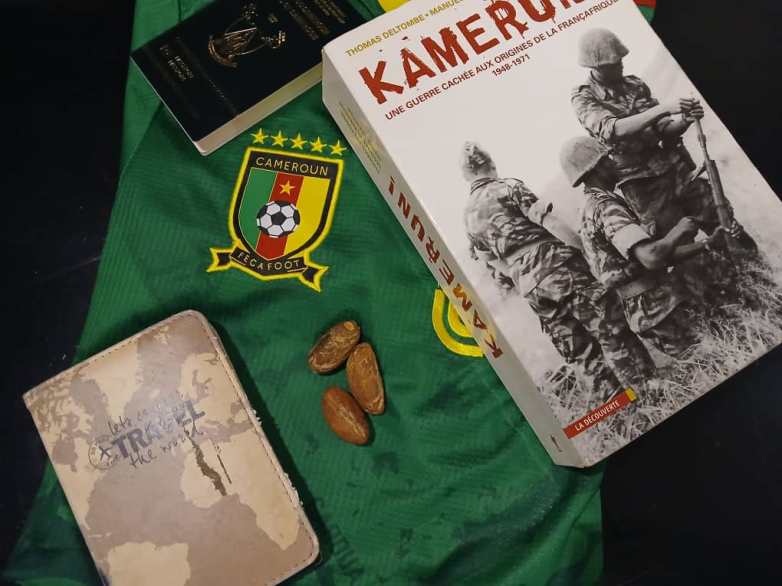
The last presidential election in Cameroon revealed how exhausted Cameroonians were from the current political regime. I am personally exhausted too. Forty-three years in the same stagnant and deteriorating political and social environment. No more perspective, only flat slogans.
Cameroon has always been seen externally as a land of peace. Till today, people still hold that view.
The Hidden Wars: Boko Haram and the Anglophone Crisis
What many people ignore is that since 2014, Cameroon has been engaged in an asymmetrical war against Boko Haram in the Far North region of the country, a part of the country where approximately 70% of school-age children do not have access to education, making it perfect ground for sectarian groups such as Boko Haram to spread extremism and enrol members.
They also ignore that since 2016, the central government has been at war against its own citizens in the North West and South West regions of the country, where separatist groups have emerged claiming the establishment of the Ambazonia state, seeking to break away from “Francophone Cameroon.” I use these simplistic terms deliberately, but the reality is far more complex than it seems, understanding it requires looking back at the history of the country, which is itself a source of division.
The divisions we live with today in Cameroon’s sociopolitical environment are the fruit of decades of violence dating back to the colonial era, continuing through the independence period.
Defining Reconciliation
Before exploring the sources of division that make the reconciliation process in Cameroon so complex, let me define what reconciliation means. Reconciliation is about restoring relationships damaged by violence, both among and between people. We look at vertical relationships, which exist among people themselves, and horizontal relationships, which exist between people and institutions.
Disclaimer: stop conflating reconciliation and forgiveness, they are two different processes. One may contribute to achieving the other, and vice versa, but they remain distinct. If you have any doubt, ask Pope Leo XIV.
With that said, let us navigate toward the reasons that lead me to foresee that reconciliation will be a challenging process in Cameroon.
Reason 1: The Unhealed Colonial Past and the Division Around the Narrative on Cameroon’s Liberation Movement
The Danger of Starting “Secondly”
For those who might say “again, blaming colonialism 70 years later, when will we move on?“, I will reply that it is almost impossible to discuss the formation of states in Africa without addressing colonialism, because the design of the State as we know it today is one of the direct products of that era. As Chimamanda Ngozi Adichie argues in her TED Talk on the “Danger of a Single Story,” discussing the failure of African states without speaking of colonialism is like starting a story by saying “secondly.” We must start at the beginning.
With that framing clear, allow me to proceed.
The Dual Colonial Legacy and the Silenced Liberation War
It is known that Cameroon came under French and British colonial rule following the end of the First World War, which gave us the dual linguistic heritage of French and English, and the sub-national identities of Francophone and Anglophone.
But what most people do not know is that Cameroon suffered one of the most violent and horrific liberation struggles on the continent — comparable in scale to that of Algeria — yet one which has been almost entirely overshadowed by it. French authorities deployed in Cameroon many of the same war tactics used in Algeria: mass forced displacement, collective punishment, paramilitary militias, targeted violence including executions and torture, and political assassinations. These were unleashed against the Cameroonian people and against the nationalist movement led by the Union des Populations du Cameroun (UPC), which sought the total and unconditional liberation of Cameroon from French rule.
On 13 July 1955, the French colonial administration officially labelled the UPC as a “communist” organisation and banned it, a designation designed to delegitimise the movement and justify the repression that followed.
Heroes Made Into Enemies
As a nation, we have never had the chance to acknowledge and collectively mourn that past.
Our first President, Ahmadou Ahidjo, himself a product of the French colonial administrative system, carried on that legacy by systematically eliminating the remaining members of the nationalist movement through targeted assassinations carried out in plain sight. Our heroes were killed like common criminals. The repression continued well into independence, and those heroes were presented to the Nation as its enemies by the very government that claimed to represent it. They were branded maquisards, as their/our liberation struggle was called the maquis.
Till today, in Cameroon’s political arena, some of those heroes are mocked ( if not openly insulted) and their contribution to liberation is actively downplayed. What kind of nation can rise into a unified people if its common history is not taught truthfully, and its heroes are not celebrated?
We cannot go forward if we refuse to pause, look backward, and acknowledge our past. With what foundation do we move forward, if not one built on lies?
Reason 2: The Politicisation and Instrumentalisation of Ethnicity
From National Unity to Tribal Politics
On top of the Francophone and Anglophone sub-national identities that Cameroon carries, the country is home to approximately 250 to 280 ethnic groups living across its 10 regions and in the diaspora. During the liberation struggle led by the UPC, the diversity of the movement’s membership reflected the full socio-anthropological composition of Cameroon. It was not the fight of people from the North, nor from the East, it was a fight of Cameroonians as one and indivisible people.
How then, did we arrive at a place where, in today’s sociopolitical arena, access to public services, the weight given to your opinions, and the perception of your identity are all shaped by the question: “Where are you from?” When did we regress to such a reductive and devaluing perception of our rich cultural heritage?
Sundays in Cameroon are generally the day with the greatest influx of political debates across television channels. They are also the day that most clearly reveals how deeply tribalistic political speech and media have become. We can barely sustain a constructive debate without it drifting toward individual ethnicity.
Structural Violence in Policy and Law
In September 2000, Decree No. 2000/696/PM updated the original Decree No. 82/407 of 7 September 1982, establishing a policy of regional balance in Cameroon. This policy was aimed at ensuring “fair” representation (through ethnic and regional quotas) in public administration and competitive national examinations, in order to prevent the dominance of any single region or ethnic group in public employment.
The intent of this law may sound logical given the country’s diversity, but examined through the analytical lens of the Triangle of Violence developed by sociologist Johan Galtung, it constitutes structural violence. Instead of tackling the root causes — the unequal quality of education across regions — and raising standards to increase the competitiveness and competencies of all citizens, the State chose a shortcut that institutionalises ethnicity as a category of governance.
When renewing my national identity card in September 2025, I was shocked to discover that the ethnicity of both parents was now required on the form, and that I was obligated to select one of my parents’ ethnicities as my own. A decade earlier, when I had first obtained my national ID, no such requirement existed. While countries like Rwanda have removed such ethnic classifications from identification processes (driven by the memory of their genocidal past) here we are, doing the opposite.
Tribalism Aired Loud and Clear
In the lead-up to the presidential elections, incendiary debates took place around land ownership and ethnicity. Despite the existence of a national body responsible for media oversight, individuals with long-standing political backgrounds were able to openly voice opposition to land ownership outside one’s region of origin, claiming that citizens from the West of Cameroon were “taking over” land in both capital cities and insisting they “go back to their region.” Pure tribalism, broadcast without consequence.
The post-electoral period was worse. Shortly after the Constitutional Council promulgated the results, national television broadcast an interview with a citizen who, celebrating the outcome, declared: “We can’t put kilichi in peanut sauce.” To decode this: kilichi is a dried meat delicacy associated with communities from the Far North and North regions (the region from which the losing candidate came) while peanut sauce is a dish associated with the Centre region, home of the incumbent President. Out of hundreds of possible interviews, this was the one chosen to air. During the same period, reports emerged of citizens being stopped and questioned based solely on their physical appearance and perceived ethnic origin; tribalism taken to its most dangerous extreme.
What Still Holds Us Together
People may wonder how, despite the proliferation of tribalistic rhetoric, divisive political figures, and ethnically charged administrative measures, Cameroon has not yet collapsed. The answer is simple: ethnicity has been instrumentalised from above, but it does not reflect the actual reality of daily Cameroonian family life. Inter-ethnic marriages are plentiful, and mixed families are a common reality. I myself carry a dual cultural identity. That is what still keeps our heads above water.
We are a plural country, and that plurality, despite everything, remains our greatest strength.
To be continued in Part 2.
 Cameroon Passport Diaries